What is ketamine infusion therapy?
Ketamine infusion therapy is the supervised medical use of ketamine, often given
intravenously in a clinic, to treat psychiatric and pain conditions that have not
responded well enough to standard care. Unlike daily antidepressants, infusions are
typically delivered in a series of sessions with monitoring, screening, and a plan
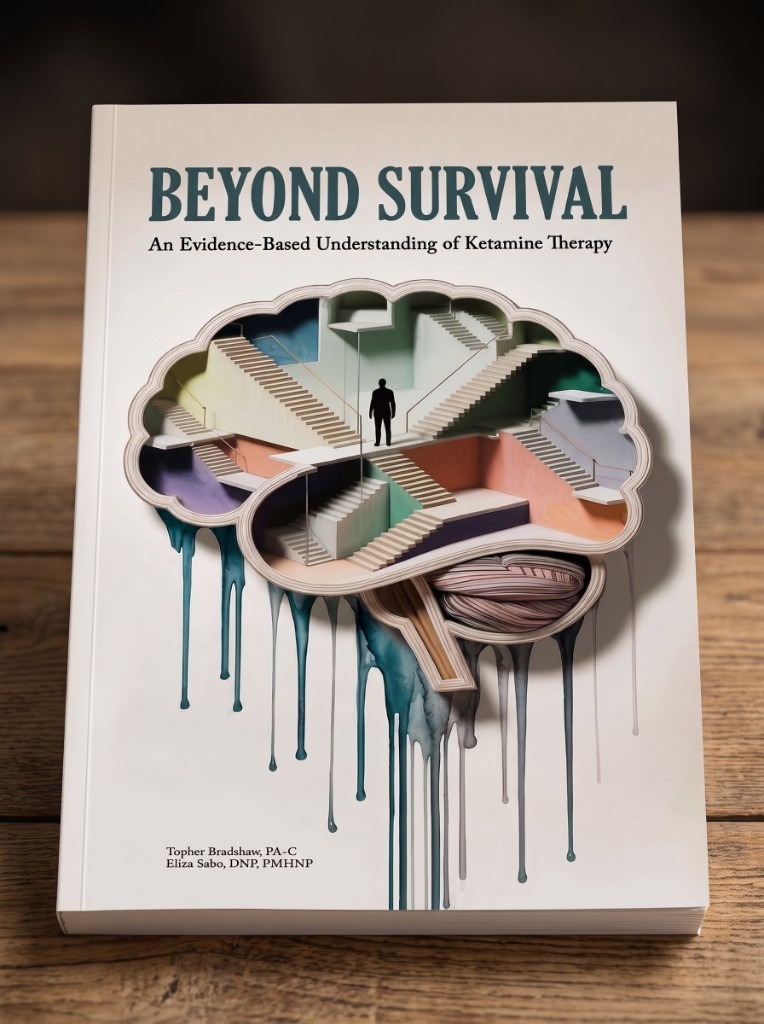
for what happens afterward. Beyond Survival explains how this treatment
developed, what the research currently shows, and where important uncertainties
remain.
How do ketamine infusions work in the brain?
Ketamine acts primarily on the glutamate system, especially NMDA receptors, rather
than on serotonin the way many SSRIs do. Researchers believe this can rapidly
increase neuroplasticity — the brain’s capacity to form new connections — which may
create a window in which mood, fear responses, and stuck patterns can shift. That
window does not finish the work by itself. Therapy, sleep, relationships, and
integration often determine whether a change holds.
How is ketamine different from traditional antidepressants?
Most first-line antidepressants are taken daily and may take weeks to show benefit.
Ketamine is usually given in intermittent clinic sessions and can produce faster
shifts in depressive symptoms for some people with treatment-resistant depression.
It is not a replacement for every medication, and it is not appropriate for every
patient. The book walks through those differences in plain language, including why
“faster” is not the same as “finished.”
Can ketamine infusions help treatment-resistant depression?
Treatment-resistant depression generally means depressive symptoms that have not
improved enough after adequate trials of standard treatments. Ketamine has become
one of the more studied options in that setting, and many clinics now offer IV
ketamine or esketamine (Spravato) for this reason. Response varies. Some people
improve quickly, some improve partially, and some do not respond. An honest guide
has to make room for all three outcomes.
Is ketamine used for PTSD, trauma, and anxiety?
Clinics also use ketamine in people living with PTSD, trauma-related symptoms,
anxiety, and related conditions, including first responders and veterans whose
nervous systems have been in survival mode for a long time. Evidence is stronger in
some conditions than others. Beyond Survival covers depression, PTSD,
trauma, anxiety, suicidality, and chronic pain without collapsing them into one
promise.
What does a ketamine infusion feel like?
Experiences vary. Many people describe a shift in perception, time, or body
sensation during an infusion, followed by a quieter after-period. Some sessions feel
meaningful. Some feel uneventful and still matter later. The book describes what
patients commonly experience during and after treatment so the process is less
mysterious — and so unexpected feelings are less likely to be mistaken for failure.
What is the difference between IV ketamine and Spravato?
IV ketamine is racemic ketamine given by infusion in a medical setting. Spravato is
esketamine, an FDA-approved nasal medicine used under a REMS program, usually with
specific depression indications and insurance pathways. Both are related to
ketamine; they are not identical in dose, delivery, regulation, or evidence. If you
are comparing clinics, ask which they offer and why.
What is integration after ketamine therapy?
Integration is the work of taking what surfaced during a session and anchoring it in
ordinary life: sleep, relationships, therapy, routines, and the stories you tell
yourself. Insight during an infusion tends to fade without scaffolding. The
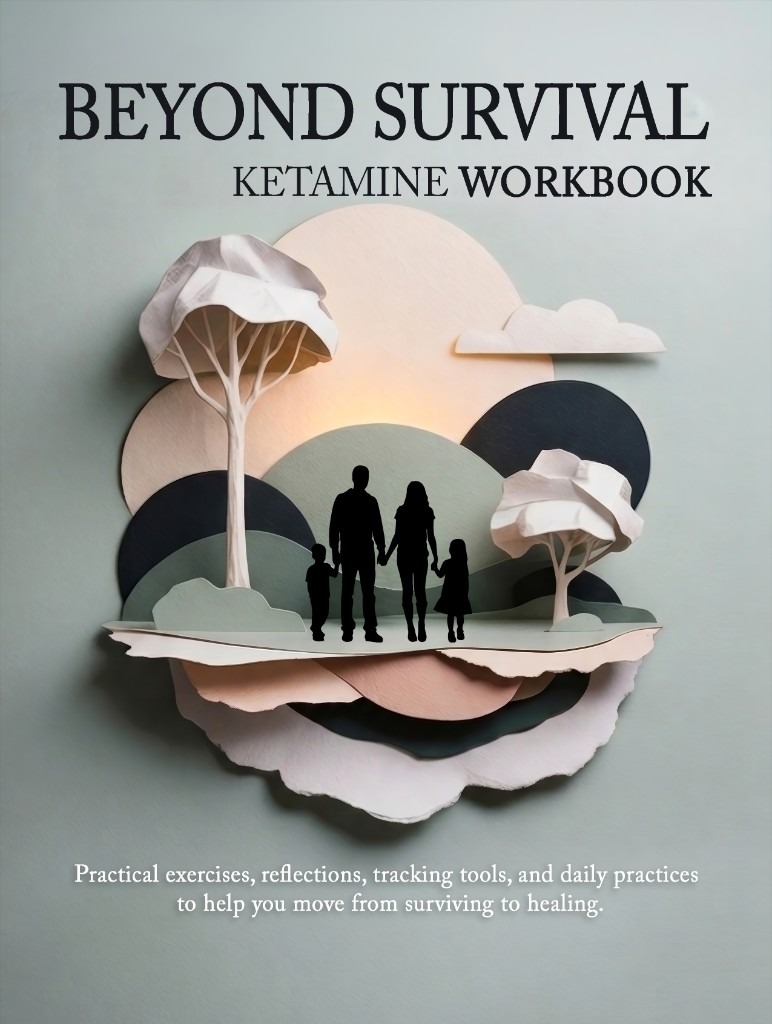
companion workbook includes intention-setting, session journals, and integration
exercises for the 24 to 72 hours after treatment, when the brain may be more open
to new patterns.
What are the risks and side effects of ketamine treatment?
Ketamine is not risk-free. Possible effects include dissociation, nausea, blood
pressure changes, bladder issues with frequent or high-dose use, and psychological
distress. It is not appropriate for every medical or psychiatric history. A
responsible clinic screens, monitors, and talks plainly about limitations. The book
includes questions to ask a ketamine clinic about credentials, emergency
preparedness, dosing, and follow-up.
How do I choose a ketamine clinic?
Look for licensed providers, medical screening, in-session monitoring, a clear
emergency plan, transparent pricing, and integration support — not just a quiet room
and an IV. Ask who is in the building, how they measure whether treatment is
working, and what happens if you do not respond. Appendix material in the workbook
lists practical questions for evaluating a program.
Is this medical advice?
No. The book and workbook are educational. They are not intended to diagnose, treat,
cure, or prevent any condition, and they are not a substitute for care from a
qualified clinician. Ketamine treatment is not appropriate for every individual.
Decisions about infusions should be made with a licensed medical professional.
Do I need to be in ketamine treatment to use the workbook?
No. If you are receiving ketamine therapy, you’ll find tools for preparation,
intention-setting, session journaling, and integration. If you are not, the skills
still apply: awareness, reflection, regulation, and honest practice. Healing is not
reserved for people already in an infusion chair.
Who are these books for?
Patients and families considering ketamine infusion therapy, clinicians who want a
clear field guide, and first responders and veterans whose work has left a mark.
Anyone who has tried what was supposed to help and is still looking for a way
forward.
Can clinics order copies in bulk?
Individual copies of
Beyond Survival
and the
Ketamine Workbook
are on Amazon. For clinic or bulk orders, use the
contact form.